


Content Start
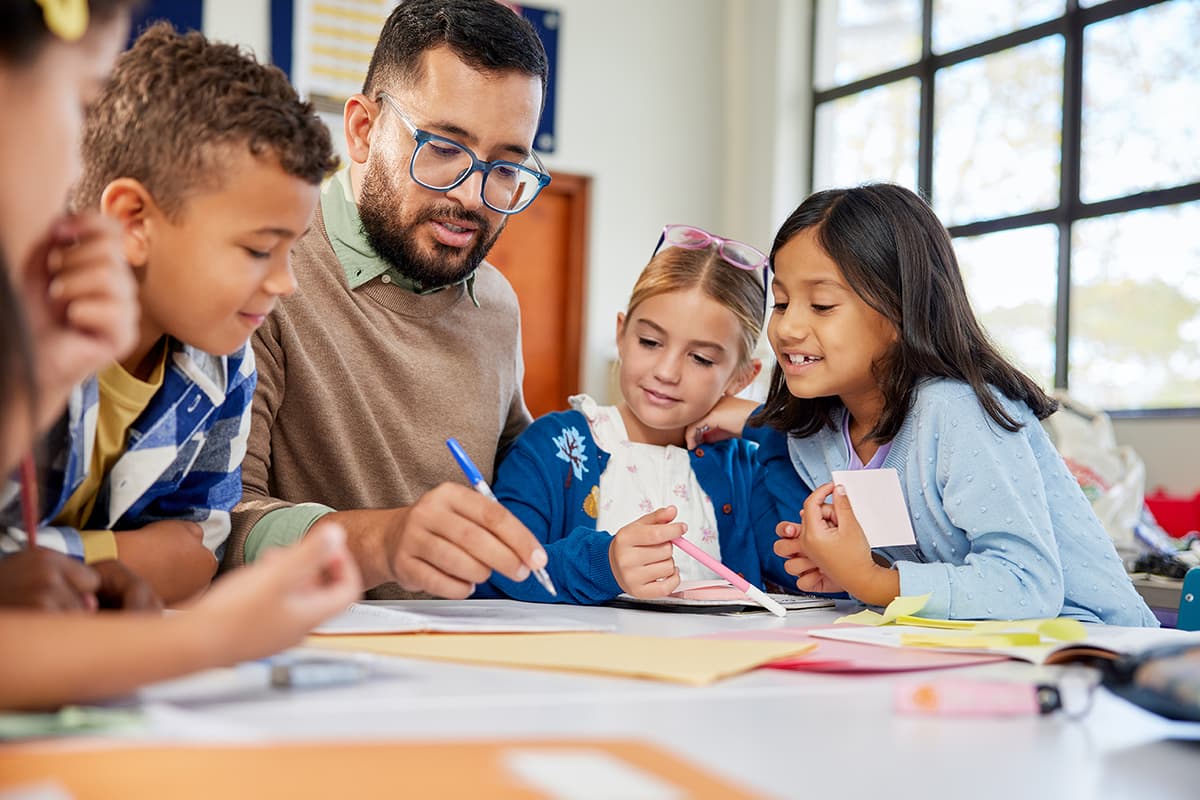
What happens when English learners (Els) have more than one exceptionality, such as being gifted and talented as well as dyslexic? How do educators go about identifying and serving these students? And how can educators be supported in their efforts, which include addressing all three needs of their students—the gift, the disability, and language? This blog focuses on these questions and examines the issues surrounding twice exceptional identified ELs, or 2e.
Beginning with Dually Identified English Learners
English learners with disabilities require special education services in addition to language support services (Individuals with Disabilities Education Act, [IDEA] 2004). In 2025, the National Clearinghouse for English Language Acquisition reported that in school year 2021–2022 there was a 15.8% increase in the number of students who were dually identified from the prior school year. That amounts to roughly 832,248 ELs with disabilities nationally. To meet these increasing numbers, districts and schools must carefully identify and serve ELs with disabilities, which can be challenging when trying to distinguish the disability from language development. Fortunately, more research has been conducted and evidence-based resources disseminated to support practitioners with appropriate practices for identifying and serving dually identified students over the past decade. For example, refer to Identifying and Meeting the Needs of English Learner Students with Disabilities (REL Southeast, 2021).
Although educators have more resources about dually identified students, there is still a need for more support with identifying ELs who are gifted and talented (Gubbins et al., 2020); data show that they are underrepresented compared to non-EL students nationally (NCELA, 2021). This need is compounded when we consider identifying and serving ELs with two exceptionalities. Tracking the rates of 2e ELs at the federal level is problematic because this data point is not collected under federal accountability requirements. Yet, we know that schools and districts struggle with providing 2e ELs with the kinds of services they need to succeed in school.
Taking a Deeper Dive into 2e ELs
As noted, ELs who are 2e are students whose home language is not English and who are gifted and also have been identified with a disability (typically learning or developmental). Students in this category can be gifted in one area such as art, math, music, writing, or something else and possess at least one learning challenge in addition to learning how to speak, read, and write in English. Being twice exceptional requires two steps. First, it requires students to be identified as unusually talented in one area, and second, that they have a diagnosis of a disability. For example, an eighth-grade student who can do college-level math but struggles with reading due to Dyslexia would be considered 2e.
It is important to note that twice exceptionality looks different for every child. Twice-exceptional students demonstrate high ability, talent, or giftedness in one or more areas. In addition, a 2e student’s gifted strength may hide their disabilities, while their disabilities may make their gifted abilities less noticeable. Some students use their talents to compensate for learning challenges, making identification more difficult.
Many 2e students are highly creative, curious, imaginative, and verbally expressive. They often show strong problem-solving skills and may have either a wide variety of interests or an intense passion and expertise in a specific area. Additionally, 2e students often display uneven development, with significant differences in their social, emotional, intellectual, and physical growth. As a result, they may perform well in some areas while struggling in others.
Identifying 2e Students
Twice-exceptional students can be challenging to identify and support because they exhibit characteristics of both giftedness and disability. In many cases, their gifted abilities may mask their disabilities, while their disabilities may obscure their gifted potential. Thus, their strengths, learning challenges, or both may go unrecognized. Adding English language acquisition to the mix adds another layer of complexity to identification. This difficulty in identification and support can place twice-exceptional students at risk of having their academic, social, and emotional needs misunderstood, overlooked, or insufficiently addressed.
It is important for a psychologist or mental/medical health professional to administer the appropriate assessments for identification of both giftedness and disability. Additionally, it is critical to review multiple sources of information including report cards, classroom observations, documentation of interventions provided, and assessment results so that there is a comprehensive profile of the student.
Serving 2e ELs
Once identified, it is important to adequately supports 2e EL’s areas of need while nurturing their strengths and giftedness. While not a comprehensive list, the following strategies can help facilitate positive outcomes for 2e students.
- Support Language Development. Support students’ language development through tools such as visual aids, sentence frames, and collaborative learning structures. These supports help students access and understand academic content while building language skills. Ongoing assessment is equally important, as it enables teachers to tailor instruction to students’ needs and helps students monitor their growth in academic language and content learning.
- Support the Disability Related Need. Supports for students will vary depending on the student’s diagnosis and area of need. It is important to provide explicit instruction in these areas of need. For a student with a specific learning disability (SLD) in reading or dyslexia, this may include targeted academic instruction in foundational literacy skills or comprehension strategy instruction. For a student with ADHD (Attention-deficit/hyperactivity disorder), supports may include organization support or executive function skill development. For a student with a speech or language delay, an appropriate support may be speech therapy, whereas a student on the Autism spectrum may need social skills instruction and communication supports.
- Implement Gifted Education Strategies. Specific strategies for supporting gifted students are also dependent on the area of giftedness of the student. Students who are academically gifted can benefit from educational acceleration in their subject of strength. Studies have also shown that providing opportunities for choice and flexibility positively impacts engagement while supporting the academic learning of gifted and talented students. Compacting is another instructional strategy that condenses, modifies, or streamlines the regular curriculum to reduce the repetition of previously mastered materials.
Supporting States in the Region in this Topic
Staff with expertise in ELs and students with disabilities at the Gulf CC are collaborating with state teams from the Florida Department of Education (FDOE) to codevelop two sets of instructional guides. The first focuses on using specially designed instruction for students with disabilities, including ELs. The other instructional guide is designed to support educators with aligning their practice with the 2025 Florida Teacher Standards for English for Speaker of Other Languages Endorsement. Both of these instructional guides include student vignettes that support educators with understanding how to apply evidence-based practices that meet the individual needs of ELs and dually identified ELs.
The Mississippi Department of Education (MDE) has identified dually identified students as one of its priorities related to ELs. Gulf CC’s work with the MDE EL team is to facilitate the development of state guidance on identifying and serving ELs with disabilities so that districts and schools have evidence-based tools and information they need to serve students. One of the resources in the guidance includes 2e ELs. The reality is that any student may have a disability and a gift, whether their first language is English, Spanish, Vietnamese, or Tagalog. Consequently, Gulf CC’s response is to identify what works and ensure that educators have access to evidence-based, actionable information and resources.
For more information about these projects, please access these links:
- MDE Project: Evidence-Based Practices for ELs
- FDOE Project: Instructional Guides for SWDs and ELs
Authors: Miriam Ortiz and Heidi Goertzen, Gulf Comprehensive Center
To provide feedback on this blog, use this link or the QR code below:

References
Gubbins, E. J., Siegle, D., Peters, P. M., Carpenter, A. Y., Hamilton, R., McCoach, D. B., Puryear, J. S., Langley, S. D., & Long, D. (2020). Promising practices for improving identification of English learners for gifted and talented programs. Journal for the Education of the Gifted, 43(4), 336-369. https://files.eric.ed.gov/fulltext/EJ1274125.pdf
Individuals with Disabilities Education Act, 34 C.F.R. § 300.324(a)(2)(ii) (2004). https://sites.ed.gov/idea/regs/b/d/300.324/a
National Association for Gifted Children. (2026). Gifted education strategies. https://www.nagc.org/gifted-education-strategies
National Clearinghouse for English Language Acquisition. (2021). English learners in gifted and talented programs. https://ncela.ed.gov/sites/default/files/legacy/files/fast_facts/Del4-4GiftedTalented-20210208-508.pdf
National Clearinghouse for English Language Acquisition. (2025). Information elevated: English learners with disabilities. https://ncela.ed.gov/resources/media-information-elevated-english-learners-with-disabilities-december-2025
REL Southeast. (July 2021). Identifying and meeting the needs of English learner students with disabilities. Institute of Education Sciences. https://ies.ed.gov/sites/default/files/migrated/rel/infographics/pdf/REL_SE_Identifying_and_Meeting_the_Needs_of_English_Learner_Students_with_Disabilities.pdf
Rizzo, L., Pinnelli, S., & Minnaert, A. (November 2025). Twice-exceptional students: A systematic review to outline the distinctive characteristics through a multidimensional lens. Frontiers in Education, 10. https://doi.org/10.3389/feduc.2025.1696805
The Association for the Gifted of the Council for Exceptional Children. (2020). 2e Definition. https://cectag.com/about-tag/2e-definition

 The contents of this website were developed under a grant from the U.S. Department of Education (Department). The Department does not mandate or prescribe practices, models, or other activities described or discussed in this document. The contents of this website may contain examples of, adaptations of, and links to resources created and maintained by another public or private organization. The Department does not control or guarantee the accuracy, relevance, timeliness, or completeness of this outside information. The content of this website does not necessarily represent the policy of the Department. This publication is not intended to represent the views or policy of or be an endorsement of any views expressed, or materials provided by any Federal agency.